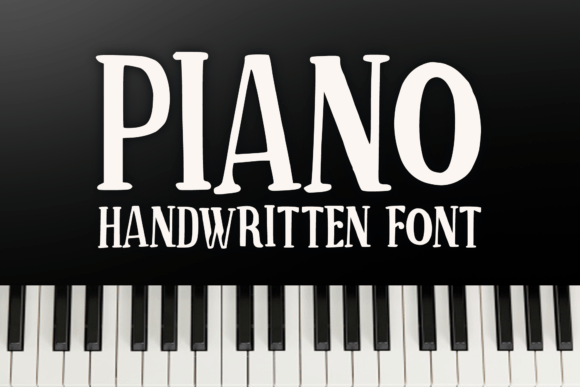
Piano: A Musical Handwritten Display Font
What Is Piano?
Piano is a graceful, musical-themed handwritten font that brings warmth and personality to any design project. With its flowing letterforms and subtle rhythmic bounce, Piano stands out among Display fonts for its expressive charm and effortless legibility at medium to large sizes. Whether you're designing greeting cards, kids’ book covers, or playful packaging, Piano delivers instant character without sacrificing clarity. If you're looking for a versatile option with creative flexibility, a Piano free download is an excellent starting point — though be sure to verify licensing terms before use. As a Display font, Piano prioritizes visual impact over dense text settings, making it ideal for headlines, posters, and branding moments where tone matters as much as typography.
Letterforms with Musical Flow
Piano’s lowercase letters feature gentle swashes and soft terminals reminiscent of handwritten sheet music — not rigid calligraphy, but something more intuitive and human. The uppercase ‘P’, ‘A’, and ‘O’ carry subtle flourishes that echo piano keys and staccato notes, reinforcing its thematic identity without becoming gimmicky.
Weight & Contrast
Designed with a consistent medium weight and low stroke contrast, Piano avoids extremes — no ultra-thin hairlines or heavy fills. This balanced approach ensures strong screen readability and crisp print output, especially when scaled for posters or social media banners.
Spacing & Rhythm
Generous letter-spacing and open counters give Piano room to breathe — critical for a Display font meant to be seen from a distance or in bold contexts like signage or packaging. Unlike tighter script fonts, Piano doesn’t collapse visually when set in all caps or stacked lines.
Piano for logo design
Its distinct voice makes Piano a compelling choice for boutique brands, music schools, or artisanal product lines — especially when paired with minimal supporting type. Just avoid overusing it in complex wordmarks; simplicity lets its musicality shine.
Piano for branding
Because of its friendly yet refined demeanor, Piano works well across brand touchpoints — from Instagram story headers to custom sticker sheets. It conveys approachability while still feeling intentional and professional — a rare balance in the Display category.
Piano for wedding invitations and cards
The font’s organic rhythm and gentle curves suit romantic, modern, or rustic wedding stationery beautifully. Use it for names and headings, then pair with a clean serif for body text to maintain elegance and hierarchy.
Piano for posters and social media
Whether promoting a local recital or launching a children’s podcast, Piano grabs attention without shouting. Its natural flow translates exceptionally well to vertical social formats and event posters where emotional resonance matters more than typographic neutrality.
Piano for packaging
On labels, tags, or gift boxes, Piano adds handmade authenticity — think small-batch jams, artisan candles, or eco-friendly toys. It signals care and craft, helping products stand out on crowded shelves or online feeds.
Font Pairing & Combinations
Knowing what fonts pair well with Piano elevates your layouts instantly. For contrast and clarity, try pairing Piano with a warm, humanist sans-serif like Montserrat or Nunito — their clean geometry grounds Piano’s fluidity. A classic serif such as Playfair Display adds sophistication for editorial or luxury applications. And if you’re building a full brand system, consider using Piano for hero text and a neutral monospace (like IBM Plex Mono) for captions or technical details. These combinations support Piano font pairing strategies that prioritize both personality and function.
Licensing & Commercial Use
One of the most common questions designers ask is: is Piano free for commercial use? The answer depends on your source. Some platforms offer Piano under a free personal-use license only, while others provide extended licenses for merchandise, web embedding, or client work. Always review the Piano font license before finalizing a project — especially if you plan Piano commercial use. For professional projects requiring legal certainty, purchasing a premium Display font license is often the safest path. That said, there are reputable sources offering a free Display font for Fonts collections that include Piano with clear attribution or limited commercial rights.
How to Download & Use Piano
You can find a download Piano font free version on several trusted sites — CreativeFabrica, FontSquirrel, and select sections of DaFont often list it with transparent usage terms. Once downloaded, install Piano via your OS font manager, then access it in Canva (upload as custom font), Photoshop (via Type tool), or Word (after system installation). Wondering how to use Piano in Canva/Word/Photoshop? In Canva, upload the .OTF or .TTF file to your Brand Kit; in Photoshop, select it from your font menu after installing; in Word, restart the app post-installation to see Piano appear in the font dropdown. Pro tip: test kerning manually — some letter pairs benefit from slight adjustments for optimal rhythm.
Designer Notes & Tips
Before committing to Piano for a full campaign, test it in black and white first — its charm relies on shape and spacing, not color tricks. Also, check how it performs at smaller sizes; while lovely at 48pt+, it’s not built for fine print or UI labels. When evaluating alternatives, consider Piano vs similar font options like Bello Pro or Salted — Piano leans warmer and more accessible, whereas those tend toward sharper contrast or tighter construction. If you need a professional Fonts font with broad stylistic range, Piano may sit alongside a carefully curated font bundle rather than serve alone. And remember: even the best Display font shines brightest when used with restraint and purpose.